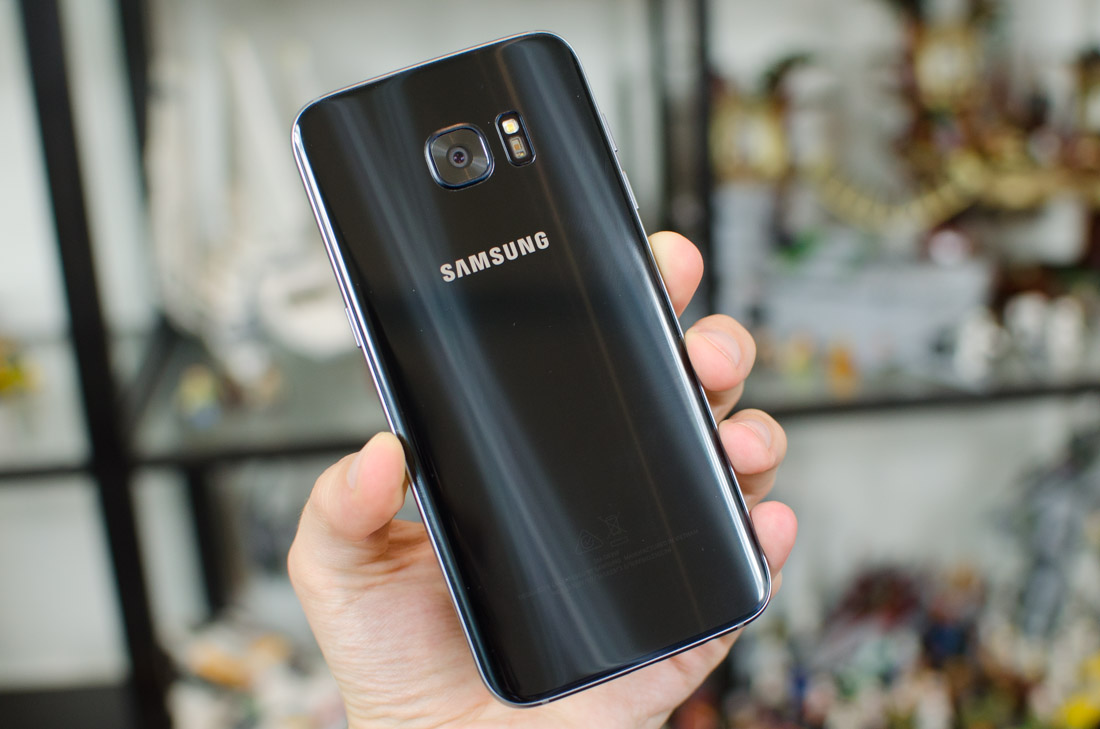
The Samsung Galaxy S7 is the perhaps the best phone you want to buy today. It’s a sophisticated, compact and powerful phone, with a fantastic camera!
| Model Name | Galaxy S7 |
| Display | 5.1 inch Display (1440 X 2560 Resolution) |
| (Super AMOLED, Force Touch with TouchWIZ UI) | |
| Processor | Octa Core Snapdragon 820, |
| Exynos 8890, 64 bit Chipset | |
| Dimensions | 142.4 X 69.6 X 7.9 mm, 152 grams |
| SIM | Nano SIM, Samsung Pay |
| Protection | Corning Gorilla Glass 5, |
| IP68 Water & Dust Resistance | |
| GPU | Adreno 530, Mali-T880 MP12 |
| ~577 ppi pixel density | |
| OS | Android v6.0 (Marshmallow OS) |
| RAM | 4 GB |
| Memory | 32 / 64 GB, |
| Micro SD up to 200 GB | |
| Camera | 12 MP f/1.7 primary camera, 26 mm |
| 5 MP Front facing camera with Dual Video call | |
| Networking | 2G, 3G, 4G LTE, HSPA, GSM support |
| v4.2 Bluetooth, NFC, Wi-Fi, A-GPS, GLONASS | |
| Sensors | Fingerprint, Retina Scanner, Auto HDR, Gyro, OIS, |
| Accelerometer, Barometer, Proximity, Heart Rate etc. | |
| Battery | 3000 mAh Non-Removable Battery |
| Colors | Black, Silver, Gold, White |
| Release date | 11-Mar-16 |
Why the Samsung Galaxy S7 Might Be the Best Phone You Can Buy Right Now
The Samsung Galaxy S7 is arguably one of the best phones available today. It’s sleek, compact, powerful, and comes with a genuinely fantastic camera. Better late than never, as they say. In many ways, the Galaxy S7 feels like the phone the S6 should have been all along, but Samsung has clearly delivered this time around, proving once again that they know how to build a top tier Android phone. It’s easily one of the best smartphones Samsung has ever released.
It’s still a bit early to crown an official best Android phone of 2016, but right now, the Galaxy S7 is genuinely hard to beat. A few other strong phones launched this year too, but none of them quite managed to match up. Even the LG G5 and HTC 10 fell short next to Samsung’s flagship. Critics gave Samsung some heat for not packing in a ton of brand new features, but the Galaxy S7 has largely silenced that criticism through sheer execution.
The Galaxy S7 is a capable Android phone with a distinctive dual curved edge screen. It builds nicely on everything that already worked well with the S6. For a lot of users, the standout feature is the always on display, which keeps useful information visible even in standby mode, things like the time, date, battery percentage, and any missed calls or texts. Still, that’s far from the most impressive thing about this phone.
In terms of design, the S7 follows a similar path to the S6, swapping out the plastic body for a metal frame paired with glass on both the front and back. Unfortunately, that shift also meant losing a few features people genuinely loved, including waterproofing, expandable storage, and a removable battery.
Battery life has improved noticeably, which is exactly what Samsung fans have come to expect. The processor got an upgrade too, pushing performance benchmarks higher than before. The camera has also improved, and while that might not fully come across on paper, it performs noticeably better in tricky conditions like low light. Mobile gamers will appreciate the new Game Launcher, and pretty much every user will find something useful in its strong multitasking and privacy features, among other additions.
Sound quality holds up well, though some still argue the S6 had the edge here. Newer connectivity standards like USB-C and Quick Charge 3.0 didn’t make the cut, and the IR blaster is gone too. There are a few smaller annoyances as well, like how easily the phone picks up fingerprints, and the continued absence of a removable battery.
Overall, the Galaxy S7 stands out as one of Samsung’s best phones yet, though there’s always room to improve, something we’ll likely see reflected in the upcoming Galaxy S8 in 2017.